
Product & Architecture
Predictable. Simpler. Scalable.
Roadrunner SMB is an AWS-native SMB3 platform purpose-built for large VDI and FSLogix environments.
VDI creates two very different Windows storage jobs: high-concurrency profile storage during login and reconnect, and long-lived corporate and departmental file storage.
Roadrunner serves both through one horizontally scalable, AD-integrated SMB fabric over Amazon EFS.
Replacing DIY Samba on EFS? Start there.
Two different workloads. One architecture.
Login and profile storage
- concentrated login and reconnect demand
- write-heavy login and settle behavior
- high metadata concurrency
- latency users notice immediately
Corporate and departmental storage
- years of capacity growth
- increasingly cold data
- broad Active Directory access requirements
- growing file-system and namespace complexity
Roadrunner serves both through the same SMB fabric while letting serving capacity and storage capacity scale independently.
Scale serving capacity without repartitioning storage
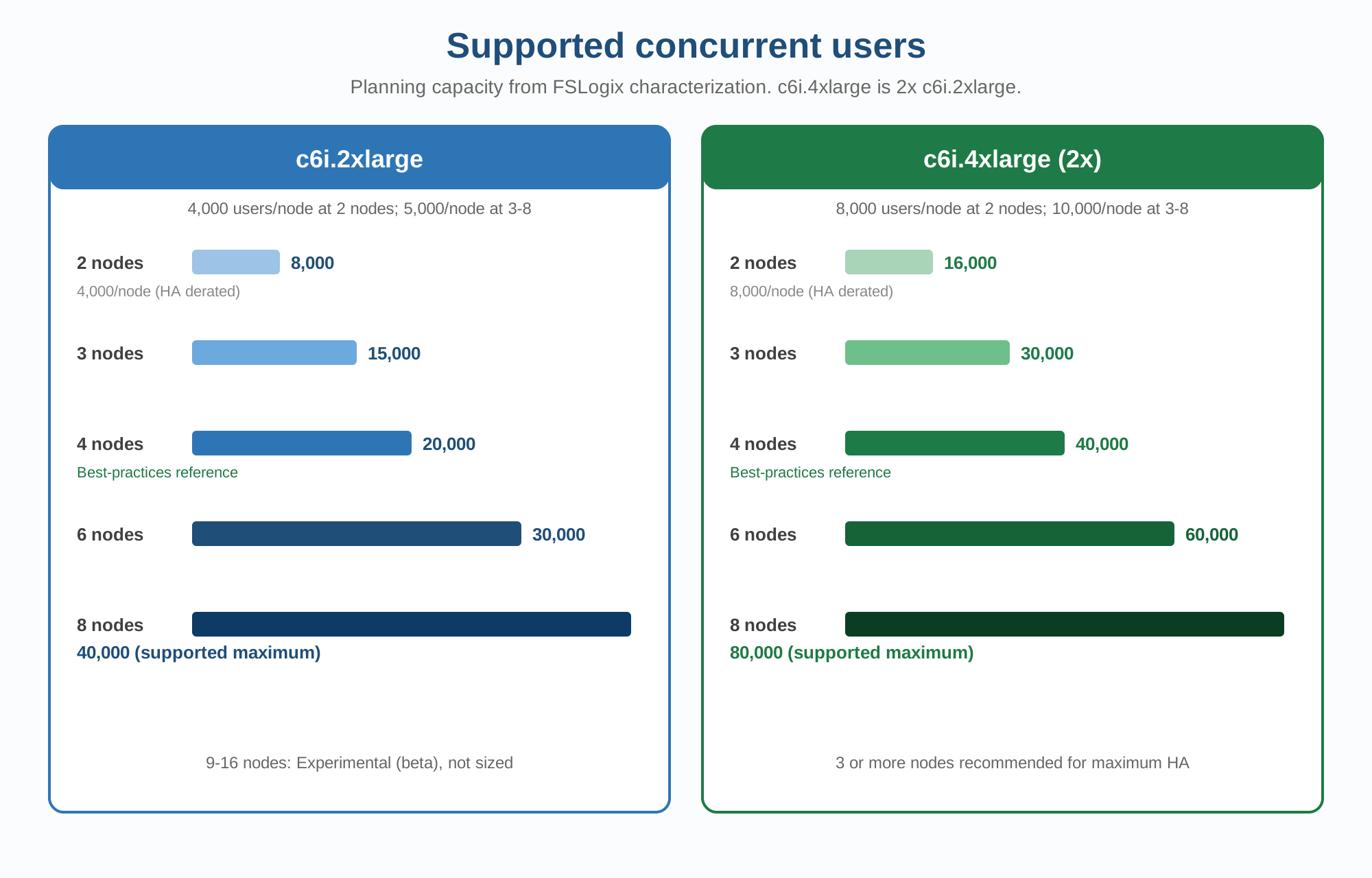
A 2-node Dual-AZ deployment provides planning capacity for up to 5,000 VDI users. Scale to as many as 8 production nodes, with planning capacity up to 80,000 users in a single integrated namespace. Capacity figures are derived from characterized FSLogix workload models and are planning guidance, not SLOs.
Throughput that follows the workload
VDI storage demand is highly uneven. Login and reconnect periods create sharp peaks, followed by much quieter periods of normal desktop activity.
Roadrunner uses Amazon EFS Elastic Throughput so backend throughput rises and falls with workload demand rather than requiring a fixed storage-throughput tier.
The storage architecture adapts to the workload instead of being sized around its daily peak.
Predictable
Designed for the concentrated workload created when many users log in or reconnect at once.
FSLogix login-storm engineering
Roadrunner SMB is engineered around concentrated login and reconnect demand, not just steady-state file-server traffic.
Hot ACL metadata off the file-data path
Hot Windows ACL metadata is served from an L1 RAM cache, with authoritative state in Amazon DynamoDB rather than the EFS file-data path.
8-channel NFS mux
Each customer share uses eight independent efs-proxy/NFS sessions to increase concurrency for file opens and small-file activity while also supporting high-throughput large-file writes.
Accept-path admission
When a node is at capacity, new connections receive SMB2 STATUS_SERVER_UNAVAILABLE after a short hold rather than a TCP reset, so Windows can retry cleanly.
Login capacity planning
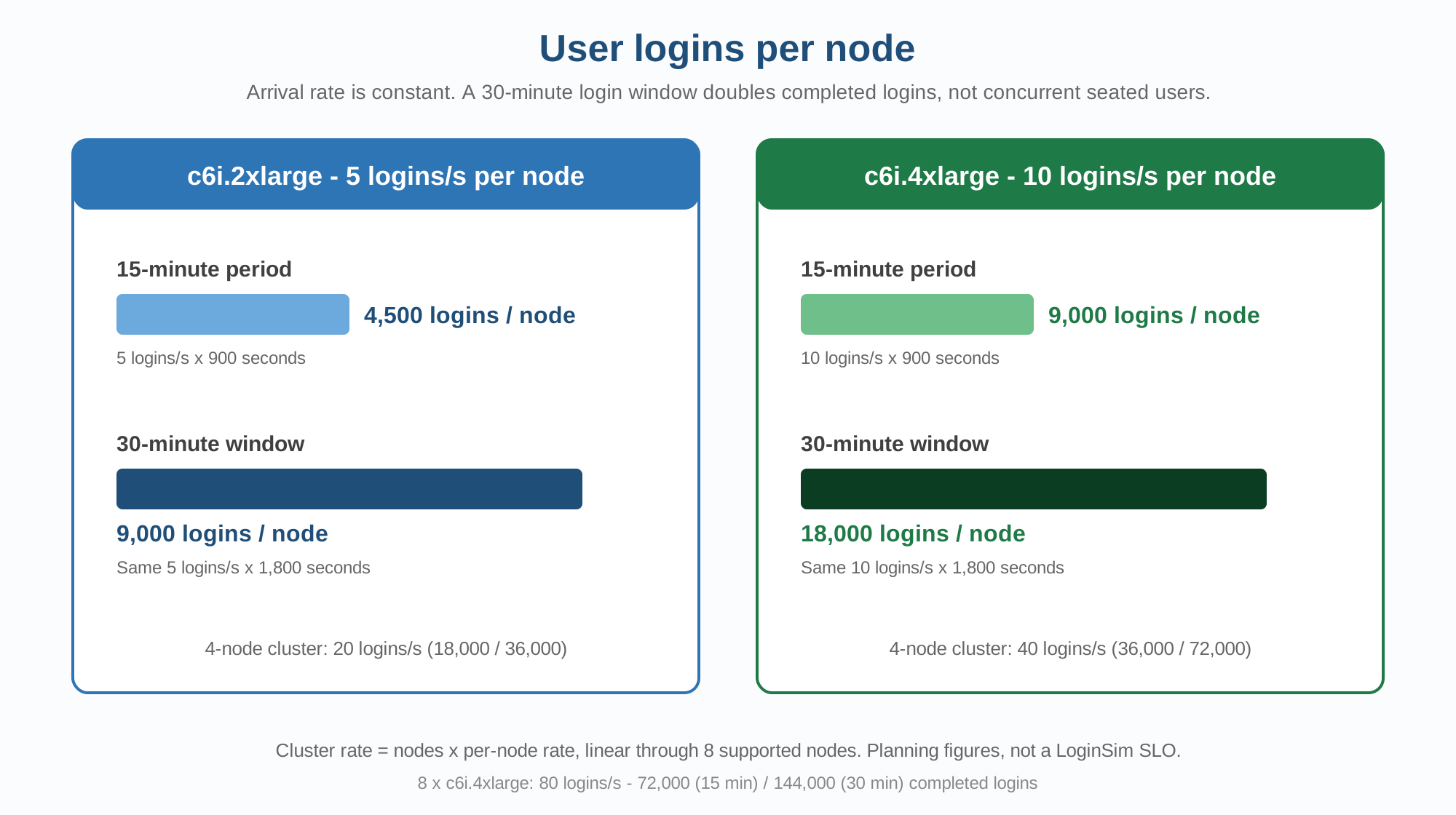
Characterized FSLogix workload models provide planning rates of 5 or 10 logins/second/node on c6i.2xlarge and c6i.4xlarge respectively. These are planning figures, not SLOs.
Simpler
One SMB fabric for profile storage and the file shares users depend on every day.
One SMB fabric for both jobs
FSLogix profiles, home directories, departmental shares, and corporate file storage share one AD-integrated SMB fabric over Amazon EFS.
Active Directory integration
Domain-join the cluster, authenticate with Kerberos, and apply Windows access controls using Active Directory users and groups.
Files remain in Amazon EFS
Persistent files live in Amazon EFS in your account. Roadrunner does not introduce a proprietary data format.
NFS and SMB on the same dataset
Where appropriate, Linux clients can access EFS over NFS while Windows clients access the same data through SMB. FSLogix profile containers should remain SMB-only.
CloudFormation deployment
Launch a complete SMB environment from AWS Marketplace: load balancing, cluster nodes, EFS integration, IAM, and security wiring.
Admin UI included
Manage shares, watch cluster health, review billing status, and generate support reports. Eval Admin is CloudFront + ALB + WAF; Dual-AZ Production Admin stays on your private network.
Scalable
Grow serving capacity and storage capacity independently - without repartitioning the EFS data estate.
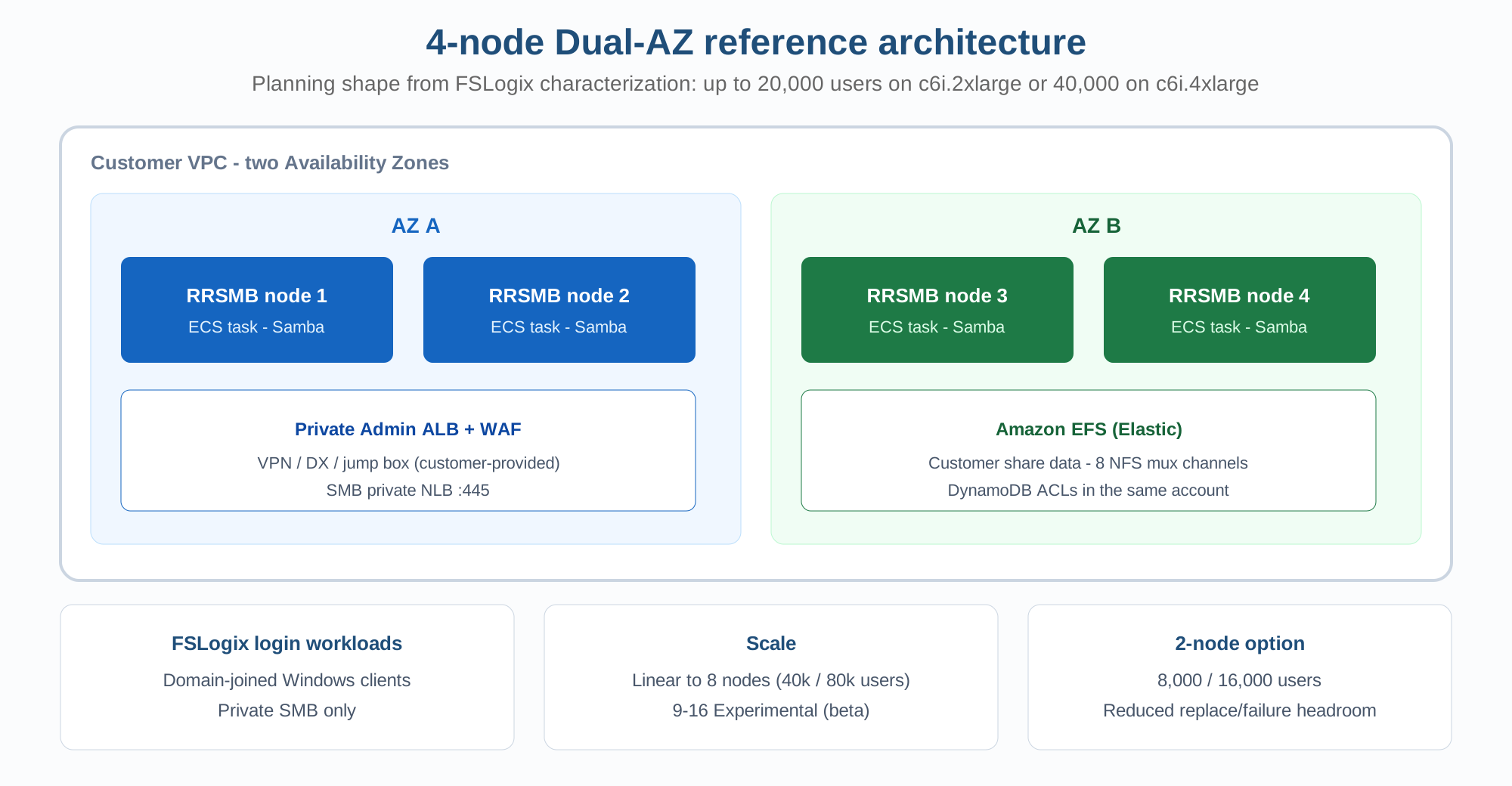
2-8 production nodes
Dual-AZ production supports 2-8 active nodes. Three or more nodes provide additional serving headroom during a node outage. Configurations of 9-16 nodes remain Experimental.
Scale serving independently of storage
Add Roadrunner nodes as SMB demand grows without requiring you to repartition persistent storage.
EFS storage growth
Capacity follows the file estate. Roadrunner does not require a new file system each time the dataset grows.
Lifecycle for aging file data
Amazon EFS Lifecycle Management can move eligible files to Infrequent Access while users keep the same SMB shares.
No storage sharding
Roadrunner does not require users or shares to be assigned to a growing collection of independent file-server storage islands.
Ideal for
- Amazon WorkSpaces and FSLogix - Capacity planning is based on real Windows FSLogix workload characterization reproduced at scale with LoginSim and CapacitySim.
- Departmental file shares - Windows team folders and shared drives backed by elastic Amazon EFS.
- Home directories - Persistent, AD-authenticated user storage for domain users.
- MSP-managed AWS file services - Deliver scalable SMB services without building and operating a traditional Windows file-server estate.
- Windows file-server modernization - Preserve SMB3, Active Directory integration, and Windows ACL semantics while moving persistent storage to AWS-native infrastructure.
Login-scale and Admin security hardening in 1.3
Roadrunner SMB 1.3 focuses on the failure modes exposed by concentrated login storms and strengthens the administrative security model for both evaluation and production deployments.
8 NFS mux channels. Each customer share uses eight independent NFS I/O channels to increase backend parallelism during login storms and other concurrent workloads.
Accept-path admission. At saturation, new connections receive SMB2 STATUS_SERVER_UNAVAILABLE after a short hold rather than a TCP reset, allowing Windows clients to retry cleanly.
FSLogix workload characterization. Real Windows Server clients running FSLogix were used to characterize login-time SMB behavior. LoginSim and CapacitySim reproduce and extend that workload model for scale testing and capacity planning.
That model produced the 5,000-user and 80,000-user planning figures above. See FSLogix Performance and Sizing
Supported Dual-AZ production cluster size is 2-8 nodes. The default remains 2. Clusters of 9-16 nodes remain Experimental (beta) and are not supported GA configurations. The Eval Kit is evaluation only.
EFS defaults to Elastic throughput. EFS file systems created by the Eval Kit and Dual-AZ templates now default to Elastic throughput. Bursting remains available as an override.
Hardened Admin security posture (1.3)
The Eval Kit now places the Admin UI and API behind CloudFront, ALB, and AWS WAF rather than exposing the Admin endpoint directly through a public NLB. Production Dual-AZ deployments keep the Admin UI and API private and require access through the customer's existing private-network controls, such as VPN, Direct Connect, a jump host, or equivalent mechanisms aligned with the customer's VPC and security policies. SMB service traffic remains private behind an NLB in both deployment tiers.
Evaluating Windows storage architectures?
Roadrunner SMB, FSx for Windows File Server, and other AWS storage options make different architectural tradeoffs around VDI concurrency, scaling, throughput, and long-term file growth.
Compare the architectures across the dimensions that matter for AWS-hosted Windows and VDI environments.
Architecture whitepaper
The 1.3 architecture whitepaper covers login-scale hardening, NFS mux, admission control, FSLogix login characterization, the Eval vs Dual-AZ Admin security model, Elastic EFS defaults, and node-count capacity planning.

Ready to evaluate?
Subscribe through AWS Marketplace, deploy into your VPC, and connect your first SMB share in about 30 minutes.